
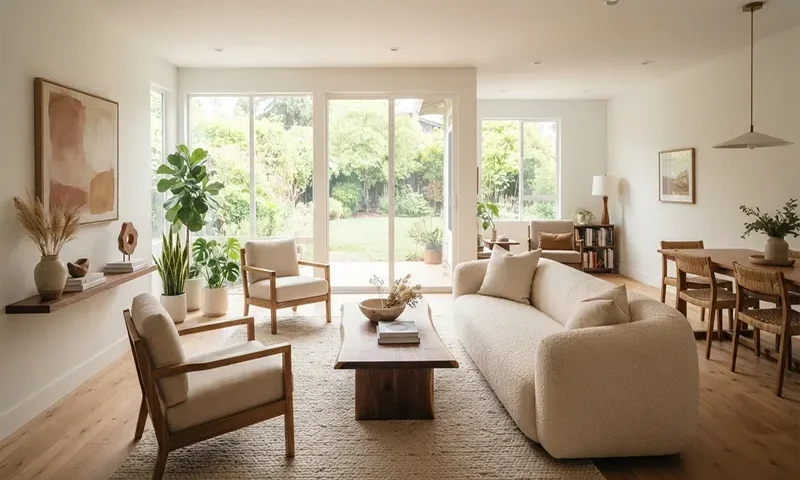
When we walk into a conventional modern home, the room’s layout almost always answers to a single master: the black rectangle of the television. Couches hug the perimeter, pointing inward like spectators in an auditorium, while cables and media consoles dictate the flow of the room. Yet, a growing counter-movement is redefining how we gather.
By embracing warm minimalism—a design philosophy that marries clean lines with cozy, tactile comfort—we can liberate our living spaces from screen-centric layouts. Designing a living room without a TV as the focal point allows the space to evolve into a true sanctuary for conversation, creativity, mindfulness, and relaxation.
The Psychology of a Screen-Free Living Room
Removing or hiding the television fundamentally alters the energy of a room. In a world saturated with digital notifications and constant visual stimulation, a screen-free living space offers an immediate psychological exhale, reducing digital fatigue and encouraging mental unwinding.
When furniture no longer faces a glowing monitor, human behavior shifts organically. Conversations flow more freely without competing audio, eye contact is restored, and spaces naturally invite reading, listening to music, sketching, or quiet reflection. Minimalist design in this context is never about creating a cold, sterile gallery; rather, it is about intentional curation that highlights warmth, texture, and humanity.
Establishing Alternative Focal Points
Without a television to anchor the room, you have the creative freedom to introduce a focal point that nourishes the senses and sparks inspiration. Consider these architectural and decorative anchors:
- Architectural Features: A working fireplace, a wood-burning stove, or a striking architectural mantel naturally commands attention and invites people to gather around its warmth. Alternatively, let a large picture window framing a serene outdoor view become the living masterpiece of the room.
- Artistic Expression: Anchor the space with a single, large-scale abstract painting, a curated gallery wall of minimalist photography, or a striking, sculptural wall mirror that reflects natural light deeper into the room.
- Organic Wonders: Introduce biophilic elements such as a mature indoor tree (like an olive or fiddle-leaf fig), a large sculptural branch arrangement in a handmade ceramic vessel, or natural stone elements that ground the room in the natural world.
Layout and Seating Strategies for Connection
The architecture of your seating arrangement dictates how people interact within a space. Moving away from wall-hugging furniture opens up the room and fosters true intimacy.
- The Conversation Layout: Arrange sofas and armchairs facing one another or in a cozy, open grouping. This encourages face-to-face interaction and makes the room feel inherently welcoming rather than performative.
- Asymmetry and Breathing Room: Embrace open floor space as a luxury. Keep the perimeter clean and let individual furniture pieces—such as a low-profile modular sofa, an organic-edged solid wood coffee table, or a sculptural accent chair—breathe within the room.
- Multifunctional Zones: Carve out smaller micro-zones within the room, such as a sunny reading nook with an ergonomic lounge chair and a dedicated floor lamp, or a quiet corner for board games and contemplation.
Infusing Warmth into Minimalism: Textures, Tones, and Lighting
To ensure a minimalist living room feels deeply inviting rather than austere, lean heavily into tactile warmth and layered elements.
- Earthy Color Palettes: Build your palette around grounding, organic neutrals: warm beiges, soft terracottas, creamy ivories, muted oaks, and subtle stone grays.
- Tactile Layering: Combine contrasting textures to add depth. Think heavy linen upholstery, boucle accent cushions, chunky wool or jute throws, a vintage wool rug, or textured wall finishes like lime-wash or tadelakt.
- Layered, Ambient Lighting: Banished harsh overhead glare in favor of a warm, multi-level lighting scheme. Combine dimmable wall sconces, low-profile floor lamps, ceramic table lamps with warm-bulb glows, and the gentle flicker of candlelight to create an intimate atmosphere after sundown.
Designing a living room around human experience rather than digital entertainment is a liberating choice. By replacing the television with alternative anchors, organic textures, and intentional layouts, you reclaim your home as a restorative haven. Step away from the screen, embrace the art of warm minimalism, and let your living room breathe warmth, connection, and calm into your everyday life.

