
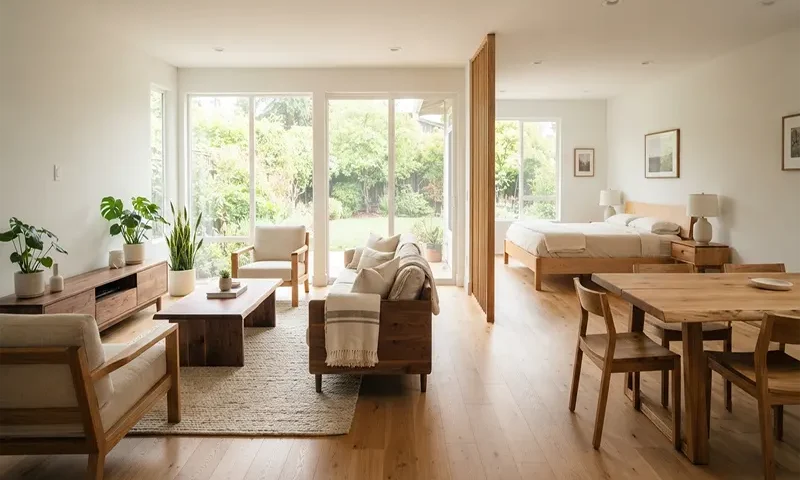
When we think about pollution, our minds instantly drift to smog-choked highways, industrial smokestacks, and crowded urban centers. Rarely do we look inward at the very spaces designed to protect us. Yet, according to the Environmental Protection Agency (EPA), indoor air pollution can be two to five times—and occasionally up to 100 times—higher than outdoor air.
One of the largest, most insidious contributors to indoor air pollution hides in plain sight: your furniture. Mass-market flat-pack pieces and conventional home furnishings often act as chemical time bombs, quietly releasing invisible toxins into your living space. Upgrading to 100 percent solid wood furniture with non-toxic finishes is one of the most effective ways to safeguard your indoor air quality and build a truly healthy, low-VOC home.
The Hidden Dangers: Why Conventional Furniture Compromises Indoor Air Quality
Walk into a standard furniture warehouse, and you will likely be greeted by a distinct “new furniture smell.” Far from being a sign of freshness, that aroma is actually a chemical cocktail known as off-gassing.
The Problem with Engineered Wood
Most affordable modern furniture is not made of wood at all. Instead, it is constructed from engineered wood products such as:
- Medium-Density Fiberboard (MDF)
- Particle board
- Plywood
To hold these compressed wood fibers together, manufacturers rely heavily on synthetic resins and adhesives that contain urea-formaldehyde. Formaldehyde is a known human carcinogen and a potent irritant that triggers respiratory issues, eye irritation, headaches, and chronic allergies. Unlike a fresh coat of paint that off-gasses quickly, engineered wood can continuously emit formaldehyde into your home for years.
Beyond Formaldehyde: Stains, Glues, and Flame Retardants
The hazard doesn’t stop at the core material. Conventional furniture is routinely treated with:
- Synthetic stains and varnishes loaded with volatile organic compounds (VOCs).
- Heavy-metal paints used for vibrant coloring.
- Chemical flame retardants mandated or traditionally added to foam and fabric, which easily detach from surfaces, settle into household dust, and disrupt human endocrine and neurological systems.
In stark contrast, pure, untreated, or naturally finished solid hardwoods bypass these chemical shortcuts entirely, preserving both your health and the integrity of your indoor environment.
What to Look For: Essential Criteria for Non-Toxic Furniture
Shopping for truly clean furniture requires looking past slick marketing terms like “eco-friendly” or “natural wood look” (which is often just a paper laminate over MDF). Keep these core criteria in mind:
- Material Purity: Demand 100 percent solid hardwoods—such as walnut, maple, oak, cherry, or ash. Avoid particle board, MDF, and composite cores completely.
- Finish Safety: Look for zero-VOC or low-VOC finishes. The safest options include natural plant-based oils (like linseed or tung oil), hardwax oils, and water-based, non-toxic finishes that do not release hazardous solvents as they cure.
- Joinery and Glues: Traditional woodworking relies on mechanical joinery (dovetails, mortise and tenon) or non-toxic, water-based wood glues rather than heavy industrial adhesives.
- Verifiable Certifications: Trustworthy brands back up their claims with independent certifications. Look for:
- GREENGUARD Gold: Certifies that products meet strict chemical emission limits, ensuring low overall indoor air contributions.
- FSC (Forest Stewardship Council): Guarantees that the solid wood is harvested from responsibly managed, sustainable forests.
- OEKO-TEX: Ensures textiles used in upholstered pieces are free from harmful chemicals.
- Declare Label: Acts like a “nutrition label” for building materials and furniture, disclosing every single ingredient used.
Top Non-Toxic Solid Wood Furniture Brands to Know
To help you jumpstart your search, several pioneering brands have built their entire ethos around transparency, sustainability, and absolute indoor air safety.
1. Vermont Woods Studios
- What they do best: Handcrafted American solid hardwoods made by generational artisans in Vermont.
- Why it’s non-toxic: They strictly prohibit MDF, particle board, and toxic chemical treatments. Their pieces feature 100 percent solid wood construction finished with traditional, organic-friendly oils and waxes that keep indoor air clean and pure.
2. Avocado Green Mattress & Furniture
- What they do best: Reclaimed and FSC-certified solid wood bedroom and living room furniture.
- Why it’s non-toxic: Avocado’s furniture line is proudly GREENGUARD Gold certified. They use 100 percent real wood free from chemical treatments, toxic glues, and synthetic laminates, ensuring your bedroom remains a sanctuary of clean air.
3. Medley
- What they do best: Modern, customizable, made-to-order furniture crafted from solid, eco-friendly materials.
- Why it’s non-toxic: Medley builds its frames using solid FSC-certified hardwoods, natural Dunlop latex, organic wool, and certified safe fabrics. They completely eliminate flame retardants and use only non-toxic, low-VOC glues.
4. Kalon Studios
- What they do best: Minimalist, architecturally stunning furniture rooted in traditional craftsmanship.
- Why it’s non-toxic: Kalon uses sustainably harvested regional hardwoods and finishes them exclusively with organic, plant-based oils and waxes. Their pieces are assembled using non-toxic water-based joinery methods.
5. Thuma
- What they do best: Ingenious, minimalist bed frames designed for modern living spaces.
- Why it’s non-toxic: Thuma utilizes Japanese-inspired interlocking joinery that minimizes (and in many cases eliminates) the need for metal hardware or toxic glues. Their frames are crafted from high-quality, natural solid wood finished with safe, low-VOC coatings.
Actionable Tips for Transitioning to a Low-VOC Home
Transforming your living space into a haven of clean air does not mean you have to throw away every piece of furniture you own overnight. Take a phased, strategic approach:
- Prioritize High-Contact Zones First: Focus your investments where you spend the most time breathing—starting with your bed frame and mattress, followed by living room seating.
- Properly Air Out New Pieces: Even natural solid wood pieces can pick up odors during shipping or from minor packaging finishes. Let new furniture sit in a well-ventilated garage or a room with open windows for a few days before bringing it into active living areas.
- Enhance Indoor Ventilation: Regularly open windows to cross-ventilate your home, and consider investing in an air purifier equipped with a True HEPA and activated carbon filter to capture lingering microscopic VOCs.
- Phase Out Old Engineered Wood Gradually: As budget allows, systematically replace old particle board bookshelves, desks, and dressers with solid wood alternatives.
Investing in non-toxic solid wood furniture is much more than an aesthetic choice—it is a profound commitment to your family’s long-term health and planetary well-being. By swapping out chemical-laden engineered woods for durable, pure hardwoods, you eliminate a silent source of indoor air pollution. Choose pieces crafted with care, integrity, and transparency, and let your home breathe life—not toxins—back into your everyday world.

