
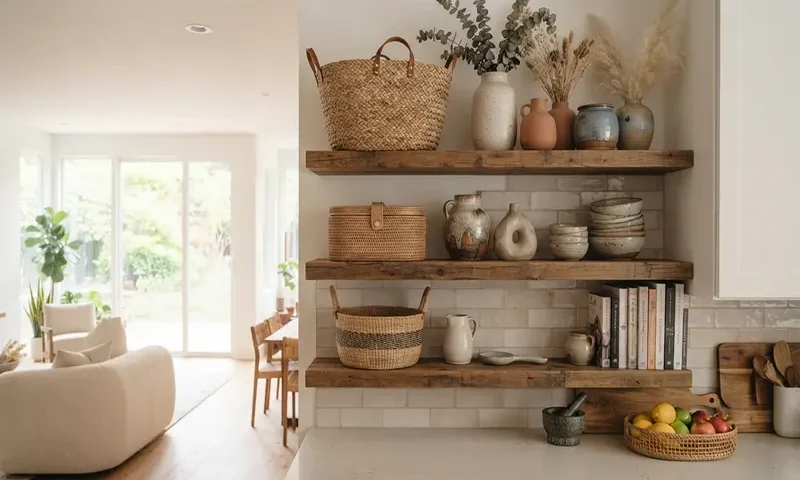
Open kitchen shelving has revolutionized modern interior design. Moving away from heavy, closed upper cabinets, homeowners are embracing airy layouts that invite light, air, and personality into the heart of the home. Yet, anyone who has ever tried open shelving knows the delicate line between a thoughtfully curated display and a cluttered, overwhelming mess.
The secret to mastering this design challenge lies in material harmony. Pairing textured homestyle baskets with organic pottery vases creates the ultimate balance of hidden functionality and artisanal beauty, turning everyday storage into intentional art.
The Power of Texture: Why Baskets and Pottery Belong in the Kitchen
Kitchens are inherently filled with hard, reflective surfaces—quartz countertops, stainless steel appliances, ceramic tile backsplashes, and smooth wood cabinetry. While sleek, these elements can sometimes feel cold or clinical.
Natural materials act as an instant antidote to this harshness. Woven rattan, seagrass, and willow baskets introduce warmth and intricate patterns, while terracotta, stoneware, and ceramic pottery vases bring earthy weight and history into the space. By embracing “functional decor”—using storage containers that double as visual sculptures—you infuse the room with soul, grounding the kitchen in an organic, lived-in elegance.
Step-by-Step Styling Framework: The Art of Composition
Styling open shelves is an exercise in intentional storytelling. Follow this four-step framework to achieve a balanced, magazine-worthy display.
Step 1: Declutter and Edit
Before putting a single item on your shelves, clear everything off. Be ruthless in your curation. Keep only what you actually use, love, and want to look at every single day. Open shelves should breathe; leaving empty negative space is just as important as the objects you display.
Step 2: Establish the Anchors
Begin by placing your heaviest and largest items first. Position a large lidded basket on a lower shelf to ground the entire composition, or place a tall, sculptural pottery vase on the top shelf to draw the eye upward and define the height of the display.
Step 3: Play with Height and Scale
Avoid lining items up in rigid, uniform rows. Instead, create visual rhythm by staggering heights. Pair a tall, slender ceramic vessel next to a low, wide-bellied woven basket. If an item feels too short, elevate it slightly on a small wooden riser or a stack of neutral cookbooks.
Step 4: The Rule of Odd Numbers and Asymmetry
Human eyes naturally gravitate toward asymmetry and odd groupings. Arrange your pottery and baskets in groups of three or five rather than even pairs. Let items overlap slightly—such as setting a smaller bowl in front of a larger vase—to create depth and dimension.
Practical Application: Organizing with Baskets vs. Displaying with Pottery
Balancing utility with aesthetics requires assigning a distinct purpose to each element on your shelves.
- Using Baskets for Hidden Storage: Baskets are your secret weapon against visual clutter. Use flat or lidded woven baskets to store pantry staples (like coffee pods, tea bags, or snacks), kitchen linens, extra dish towels, or smaller gadgets that you want out of sight but within arm’s reach.
- Using Pottery Vases for Statement Styling: Pottery can serve dual purposes or stand purely as art. Style wide-mouthed crocks to hold wooden cooking spoons and spatulas right by the stove, or let stunning, sculptural vases stand completely empty as focal points.
- Maintaining Accessibility: Never sacrifice everyday function for beauty. Ensure your most frequently used items remain easy to grab without requiring you to unstack an elaborate arrangement every time you cook.
Seasonal and Palette Adjustments for Year-Round Appeal
To keep your kitchen shelves feeling cohesive and connected to the rest of your home, establish a grounded color palette and adapt your styling with the seasons.
- The Foundational Palette: Stick to earthy neutrals that complement your kitchen’s hardware and cabinetry—warm creams, soft ivories, muted terracottas, raw stones, and natural willow tones.
- Adapting Across Seasons: Let your pottery hold nature’s changing moods. In spring and summer, fill slender ceramic vases with airy olive branches or fresh eucalyptus. In autumn and winter, transition to dried wheat, pampas grass, or bare sculptural branches to bring cozy, organic textures indoors.
Thoughtfully styled open kitchen shelves do more than just hold your plates and pantry goods—they set the aesthetic tone for your entire home. By combining the practical storage of textured homestyle baskets with the artistic beauty of organic pottery vases, you bridge the gap between form and function. Embrace slow, intentional curation, and let your kitchen shelves reflect a warm, lived-in sanctuary of style.

