
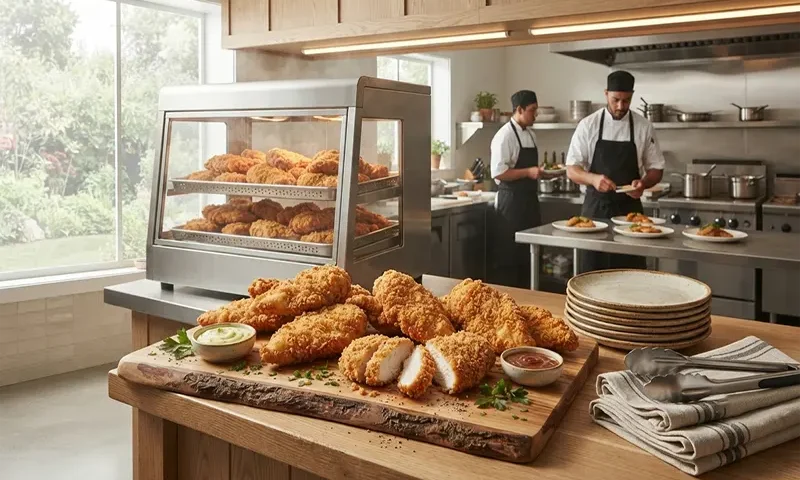
The crispy chicken fillet is the undisputed crown jewel of modern casual dining and high-volume sandwich menus. Across demographics, its cross-generational appeal is unmatched. Yet, for restaurant operators and executive chefs, delivering a truly exceptional chicken fillet during a chaotic Friday night rush presents a formidable operational challenge. How do you maintain a shatter-crisp crust, perfectly juicy interior meat, and fast ticket times when the kitchen is slammed?
Mastering signature homestyle crunchy chicken breast fillets requires a bulletproof brining process, a reliable double-dredge coating technique, and smart commercial kitchen workflow optimization.
The Anatomy of Crunch: Selecting and Preparing the Protein
In high-end casual and upscale quick-service concepts, pre-formed frozen patties simply cannot compete with the authentic appeal of whole-muscle protein.
- Protein Selection: Start with fresh, premium whole chicken breasts. Hand-trim excess fat, then butterfly and gently pound them to a uniform thickness. Uniformity ensures even cooking times, preventing thin edges from scorching while thick centers remain undercooked.
- The Brine Secret: Lean chicken breast meat dries out easily under high fryer heat. Submerge your portions in a buttermilk and pickle-juice brine for at least 4 to 6 hours. The lactic acid in the buttermilk breaks down tough muscle fibers to guarantee supreme tenderness, while the brine locks in moisture.
- Station Prep: Organize your prep line with dedicated staging pans so line cooks can move efficiently from the wet marinade to the dry dredge without bottlenecking service.
The Coating System: Engineering the Ultimate Shatter-Crisp Crust
The magic of a signature fillet lives entirely in its crust. A great coating must adhere tightly to the chicken, withstand hot oil without shedding, and deliver a rugged, ultra-crunchy texture.
- Flour and Starch Ratios: Combine high-protein all-purpose flour with cornstarch or rice flour. Starch acts as an oil-rejection barrier, preventing grease saturation and locking in an explosive crunch.
- Proprietary Spice Blend: Infuse your dry flour mixture with signature seasonings: smoked paprika, garlic powder, onion powder, a touch of cayenne for subtle heat, and coarse cracked black pepper.
- The Double-Dredge Method: Dip the brined chicken into the seasoned flour, submerge it briefly back into a clean buttermilk wash, and press it firmly back into the flour mix. This wet-to-dry staging eliminates bare spots and builds a thick, flaky exterior that holds up brilliantly against heavy sauces and slaws.
Commercial Kitchen Execution: Frying, Holding, and Speed of Service
In high-volume kitchens, execution speed and holding integrity dictate your bottom line.
- Fryer Temperature Control: Drop your fillets into commercial fryers maintained at 350°F to 365°F (175°C to 185°C). When cooking in high volume, oil temperatures inevitably drop; ensure your fryers possess fast recovery times to prevent greasy, oil-logged coatings.
- Smart Holding Stations: Never stack fried chicken fillets in sealed steam drawers or plastic cambros, which trap steam and instantly ruin your crust. Instead, place them on wire racks inside heated holding cabinets set to optimal holding temperatures to preserve crispness for up to 30 minutes.
- Cross-Contamination Protocols: Strict station hygiene is vital. Maintain clearly separated wet and dry hands or use tongs to keep the station clean, safe, and efficient during a rush.
Menu Integration and Profitability
A versatile ingredient is a profitable ingredient. Maximizing your inventory means building cross-utilization into your menu design.
- Multi-Menu Versatility: Use the exact same signature crunchy chicken breast fillet across multiple high-margin menu items—feature it as a loaded brioche chicken sandwich with hot honey, slice it over a premium chopped Caesar salad, or serve it plated with country gravy and skillet potatoes for comfort food features.
- Food Cost Management: Whole chicken breasts yield high perceived value while maintaining exceptionally healthy profit margins. Standardizing your batch-prep and frying procedures drastically reduces kitchen waste.
Elevating a classic comfort food staple with precision technique transforms an ordinary menu item into a signature destination dish. By standardizing your brining process, engineering a shatter-crisp double-dredge coating, and optimizing your line workflow, you ensure consistent culinary excellence. Standardize your recipe, empower your line cooks, and watch your guest satisfaction—and your profit margins—soar.

