
The modern kitchen is frequently ground zero for single-use plastics. From the plastic wrap sealing our leftovers to synthetic sponges scrubbing our dishes and disposable utensils tossing up our weeknight meals, convenience has historically come packaged in fossil fuels.
Yet, the zero-waste movement is not about impossible perfection; it is about practical, rewarding shifts in how we equip our homes. Transitioning to sustainable kitchen products made from biodegradable bamboo and organic materials is one of the easiest, most impactful ways to green your routine and drastically reduce household waste.
The Plastic Problem in Our Kitchens
Every time we use a plastic spatula on a hot pan, wash dishes with a petroleum-based nylon sponge, or store leftovers in single-use plastic bags, we introduce invisible hazards into our lives. Conventional kitchen plastics degrade over time, shedding microplastics that can leach into food, water, and our surrounding environment. Furthermore, these synthetic items sit in landfills or oceans for centuries.
In stark contrast, organic materials offer a closed-loop lifecycle. Plant-based and earth-born materials return gracefully to the earth when their useful life ends, leaving behind no toxic residue or microplastic footprint.
Essential Zero-Waste Kitchen Swaps: Bamboo and Beyond
Upgrading your kitchen doesn’t require a total overhaul overnight. Start by replacing your most frequently used synthetic tools with sustainable alternatives:
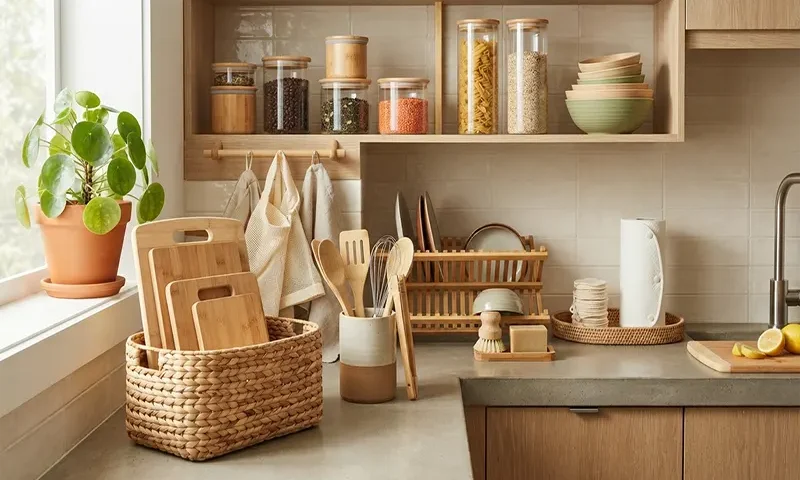
- Bamboo Utensils and Cutting Boards: Bamboo is technically a grass, making it one of the fastest-growing, most renewable resources on the planet. Naturally antimicrobial and exceptionally durable, bamboo cutting boards, spoons, and spatulas replace plastic alternatives without dulling your chef’s knives or leaching harmful chemicals.
- Plant-Based and Composting Cleaning Tools: Synthetic sponges are essentially plastic scrubbers that shed microplastics down your drain with every wash. Swap them for cellulose or loofah sponges and sisal or coconut-fiber dish brushes featuring natural wooden handles. When worn out, these compostable tools return straight to the soil.
- Organic Food Storage Solutions: Eliminate single-use plastic wrap and zip bags by utilizing reusable beeswax wraps (or vegan plant-wax alternatives), organic unbleached cotton produce bags for grocery shopping, and heavy-duty glass storage containers topped with airtight bamboo lids.
Caring for Your Biodegradable Kitchen Goods
Natural materials require a little extra love compared to dishwasher-safe plastics, but their longevity makes the minor maintenance well worth it.
- Hand-Washing: Always hand-wash wooden and bamboo utensils, cutting boards, and brush handles in warm, soapy water. Avoid letting them soak in standing water, which can cause natural fibers to warp or crack.
- Conditioning Bamboo: Periodically nourish your bamboo cutting boards and utensils with food-safe mineral oil or a natural beeswax balm to lock out moisture and preserve their rich grain.
- Responsible Composting: When your natural fiber dish brushes or cellulose sponges reach the end of their lifecycle, simply clip off any metal staples and toss the organic components right into your home compost bin.
Trading single-use plastics for biodegradable bamboo and organic materials is a powerful way to align your daily cooking habits with planetary stewardship. By making intentional, natural swaps in the heart of your home, you eliminate unnecessary waste and cultivate a healthier, more sustainable living space. Start your zero-waste journey with one meaningful kitchen swap today, and watch how small, mindful choices add up to lasting change.

