
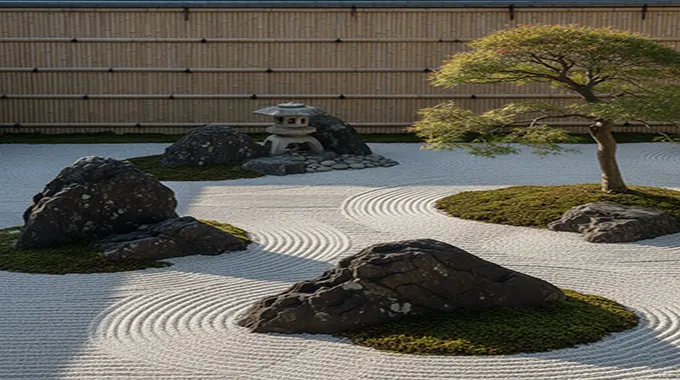
In our fast-paced world, finding a personal retreat for reflection and peace is essential. A Japanese-inspired Zen garden, or karesansui (dry landscape), offers just that. These minimalist spaces are not just aesthetically pleasing—they are designed as an aid to meditation, cultivating a sense of stillness, simplicity, and natural harmony.
Whether you have a sprawling yard, a compact balcony, or even just a desk, you can transform your space into a serene haven of relaxation.
The Core Elements of Zen Tranquility
The secret to a Zen garden lies in its symbolic representation of nature, focusing on key elements to evoke calm and mindfulness:
- Stones and Rocks: These are arguably the most important elements, representing mountains, islands, or enduring natural forces. They should be placed in odd-numbered groupings (like three, five, or seven) to create an asymmetrical, natural look. For a grounding effect, partially bury large rocks.
- Gravel or Sand: This is the garden’s signature feature, representing water—oceans, rivers, or lakes. The act of raking the sand into swirling or linear patterns that mimic ripples and waves is a form of mindful, calming meditation. Use fine, light-colored gravel or sand for the best effect.
- Minimal Greenery: Traditional Zen gardens feature very few plants. Focus on a few choice specimens to add texture and subtle color:
- Moss: A soft, vibrant groundcover that symbolizes age and tranquility. It thrives in moist, shady areas.
- Specimen Trees: A carefully pruned Bonsai, Japanese Maple, or dwarf conifer can serve as a sculptural focal point.
- Bamboo: Use bamboo for subtle screening, fencing, or simple ornamental water features like a shishi-odoshi (deer scarer) for its gentle, rhythmic sound.
Design Principles for Deep Relaxation
A truly relaxing Zen garden adheres to guiding principles that shape the layout and overall atmosphere:
- Kanso (Simplicity): The garden should be uncluttered and sparse. Every element must have a purpose; avoid excessive ornamentation that can distract the eye and mind.
- Fukinsei (Asymmetry/Irregularity): While the garden must feel balanced, it should not be symmetrical. Natural landscapes are irregular, and an uneven, organic placement of elements creates greater visual harmony.
- Shizen (Naturalness): Use natural materials—stone, wood, and authentic plant life. The design should look as if it was created by nature, not artificially imposed.
- Seijaku (Stillness/Tranquility): The design should promote a feeling of calm and quiet. Choose a secluded spot, or use screens (like a bamboo fence) to separate your space from the outside world.
Zen Garden Ideas for Any Space
You don’t need a massive area to create your sanctuary. The principles apply beautifully to gardens of all sizes:
| Garden Type | Key Design Features | Relaxation Focus |
| Large Backyard Zen | A large, raked gravel expanse. Boulders as “mountains.” A seating area (like a simple wooden bench or raised deck) to contemplate the view. Winding, asymmetrical stepping stone paths to encourage slow walking. | A full-scale, immersive meditative escape. |
| Small Patio/Courtyard | Use a contained, shallow space for your gravel area. A few well-placed potted plants (bonsai or Japanese forest grass). A stone lantern or basin as a singular, beautiful focal point. | Bringing the elements of nature into a limited urban space. |
| Tabletop/Indoor Zen | A small wooden tray or shallow dish. Fine white sand, small polished river pebbles, and a miniature rake (even a fork or stylus works). Add an air plant or a piece of smooth drift wood. | A mindful activity and visual break for your desk or living room. |
By embracing simplicity and carefully selecting each element, you can create a Japanese-inspired Zen garden that offers a quiet, beautiful escape for daily relaxation and reflection.

